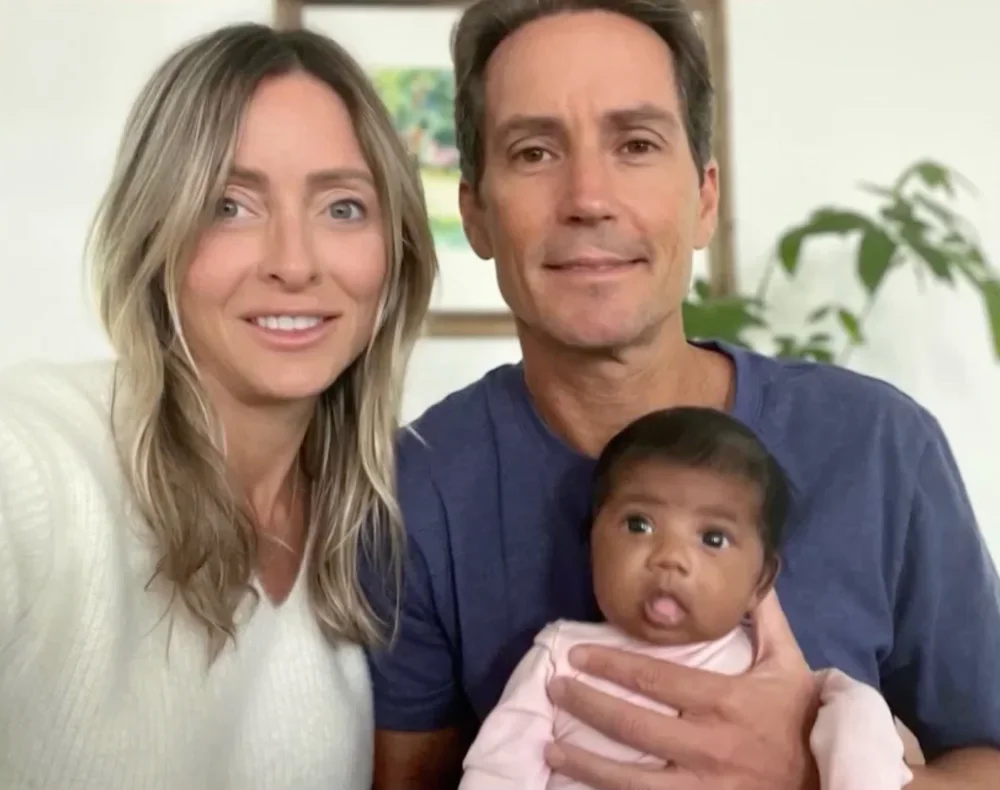
Tiffany Score and Steven Mills with the child they delivered by IVF (Credit: NBC News)
What would you do if you had a baby through IVF… then learned the child wasn’t yours?
This is exactly what happened to Tiffany Score and Steven Mills at the Fertility Center of Orlando.
When Tiffany delivered their baby, it was immediately clear that they weren’t genetically connected. (see the photo from a recent NBC News report.)
There’s been an update in the case—the biological parents have been identified.
This raises several questions:
❓Will the baby be removed from the birth parents and placed with her genetic parents?
❓If removed, will the genetic parents allow Score and Mills to stay in their child’s life?
❓Was the Score/Mills embryo transferred into another woman’s uterus, and do they have an unknown child out there?
I admire Score and Mills for their courage and commitment to lead with love in the midst of this crisis.
They’ve been quoted saying:
“𝘖𝘯𝘭𝘺 𝘰𝘯𝘦 𝘵𝘩𝘪𝘯𝘨 𝘪𝘴 𝘢𝘴 𝘢𝘣𝘴𝘰𝘭𝘶𝘵𝘦𝘭𝘺 𝘤𝘦𝘳𝘵𝘢𝘪𝘯 𝘵𝘰𝘥𝘢𝘺 𝘢𝘴 𝘪𝘵 𝘸𝘢𝘴 𝘰𝘯 𝘵𝘩𝘦 𝘥𝘢𝘺 𝘰𝘶𝘳 𝘥𝘢𝘶𝘨𝘩𝘵𝘦𝘳 𝘸𝘢𝘴 𝘣𝘰𝘳𝘯 — 𝘸𝘦 𝘸𝘪𝘭𝘭 𝘭𝘰𝘷𝘦 𝘢𝘯𝘥 𝘸𝘪𝘭𝘭 𝘣𝘦 𝘵𝘩𝘪𝘴 𝘤𝘩𝘪𝘭𝘥’𝘴 𝘱𝘢𝘳𝘦𝘯𝘵𝘴 𝘧𝘰𝘳𝘦𝘷𝘦𝘳.”
Their love transcends race, biology, and circumstance.
To call this situation “messy” is a gross understatement. The stakes for both families are life-changing.
Their case also reveals a sobering reality: 𝗙𝗲𝗿𝘁𝗶𝗹𝗶𝘁𝘆 𝗰𝗹𝗶𝗻𝗶𝗰𝘀 𝗺𝗮𝗸𝗲 𝗺𝗶𝘀𝘁𝗮𝗸𝗲𝘀.
My thanks to Karen Synesiou for sharing the annual Fertility Sector Report published by the Human Fertilisation and Embryology Authority in the UK.
It’s a regulatory report designed to track:
• Incidents
• Near misses
• Compliance issues
• System performance across every licensed clinic in the UK
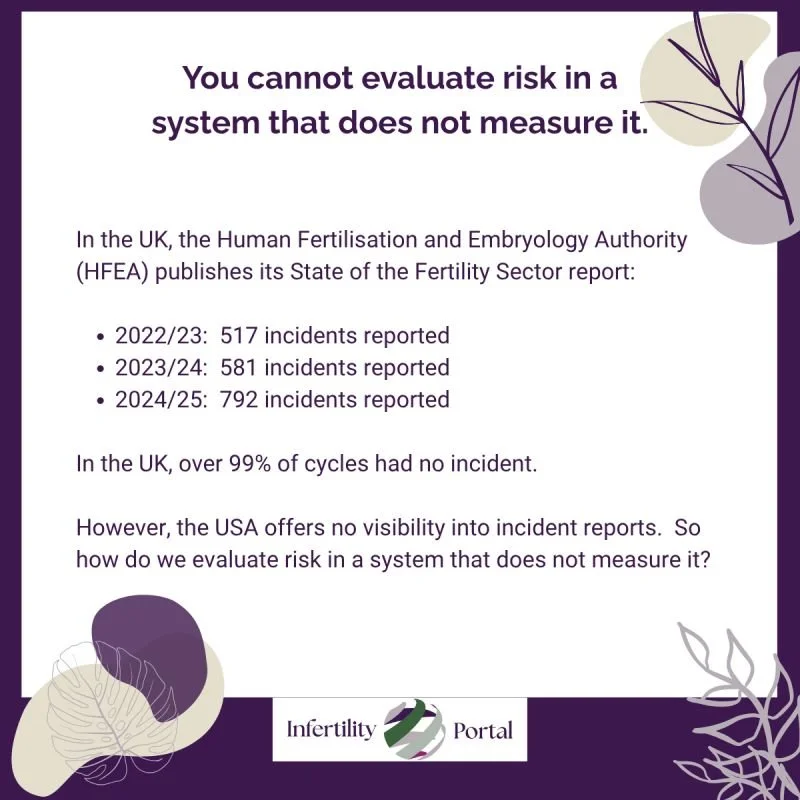
Credit: Infertility Portal
Between 2022 and 2025, reported incidents increased from 517 to 792. The report also shows that over 99% of cycles had no incident.
But that 1%…that’s where human tragedy happens.
❗Embryos accidentally destroyed.
❗Sperm used to inseminate the wrong eggs.
❗Embryos implanted into the wrong person.
That translates to roughly 8 families directly impacted—that is, if all incidents are reported.
Here’s what’s even more troubling:
The U.S. maintains no comparable national database for fertility clinic errors.
That makes it nearly impossible for American families to evaluate clinics and distinguish the exceptional ones from the sketchy ones.
Why the U.S. is lagging behind the U.K. is hard to justify. The U.S. accounts for 15–20% of global IVF births each year, while the U.K. accounts for just 3–4%.
The U.S. is behind and needs to catch up.
If you care about this issue:
Support legislation like H.R.451 Protecting Families from Fertility Fraud Act.
Push your representatives for the CDC’s National ART Surveillance System (NASS) to mandate a public-facing component for laboratory errors and adverse events.
Because just like in business, we can’t fix what we don’t measure.
And this system causes life-altering consequences. Just ask Tiffany Score.
#IVFmistakes
