Environmental toxins are quietly damaging our fertility
I sat down with Dr. Susan Fox of HeathYouniversity to talk about my experiences with infertility and IVF. Listen to the podcast.
I didn’t expect to walk away with a whole new understanding of 𝘸𝘩𝘺 infertility is rising—especially in younger women.
Global data suggests infertility is happening earlier. Around 1 in 6 adults worldwide are affected. 𝗦𝗼𝗺𝗲 𝘀𝘁𝘂𝗱𝗶𝗲𝘀 𝘀𝗵𝗼𝘄 𝗺𝗼𝗿𝗲 𝘁𝗵𝗮𝗻 𝟭 𝗶𝗻 𝟭𝟬 𝘄𝗼𝗺𝗲𝗻 𝘂𝗻𝗱𝗲𝗿 𝟯𝟱 𝗮𝗹𝗿𝗲𝗮𝗱𝘆 𝘀𝗵𝗼𝘄 𝗹𝗮𝗯𝗼𝗿𝗮𝘁𝗼𝗿𝘆 𝘀𝗶𝗴𝗻𝘀 𝗼𝗳 𝗱𝗶𝗺𝗶𝗻𝗶𝘀𝗵𝗲𝗱 𝗼𝘃𝗮𝗿𝗶𝗮𝗻 𝗿𝗲𝘀𝗲𝗿𝘃𝗲.
That last statistic shocked me.
It made me wonder: what’s making our young women sick?
So I started digging. The deeper I went, the more my stomach churned.
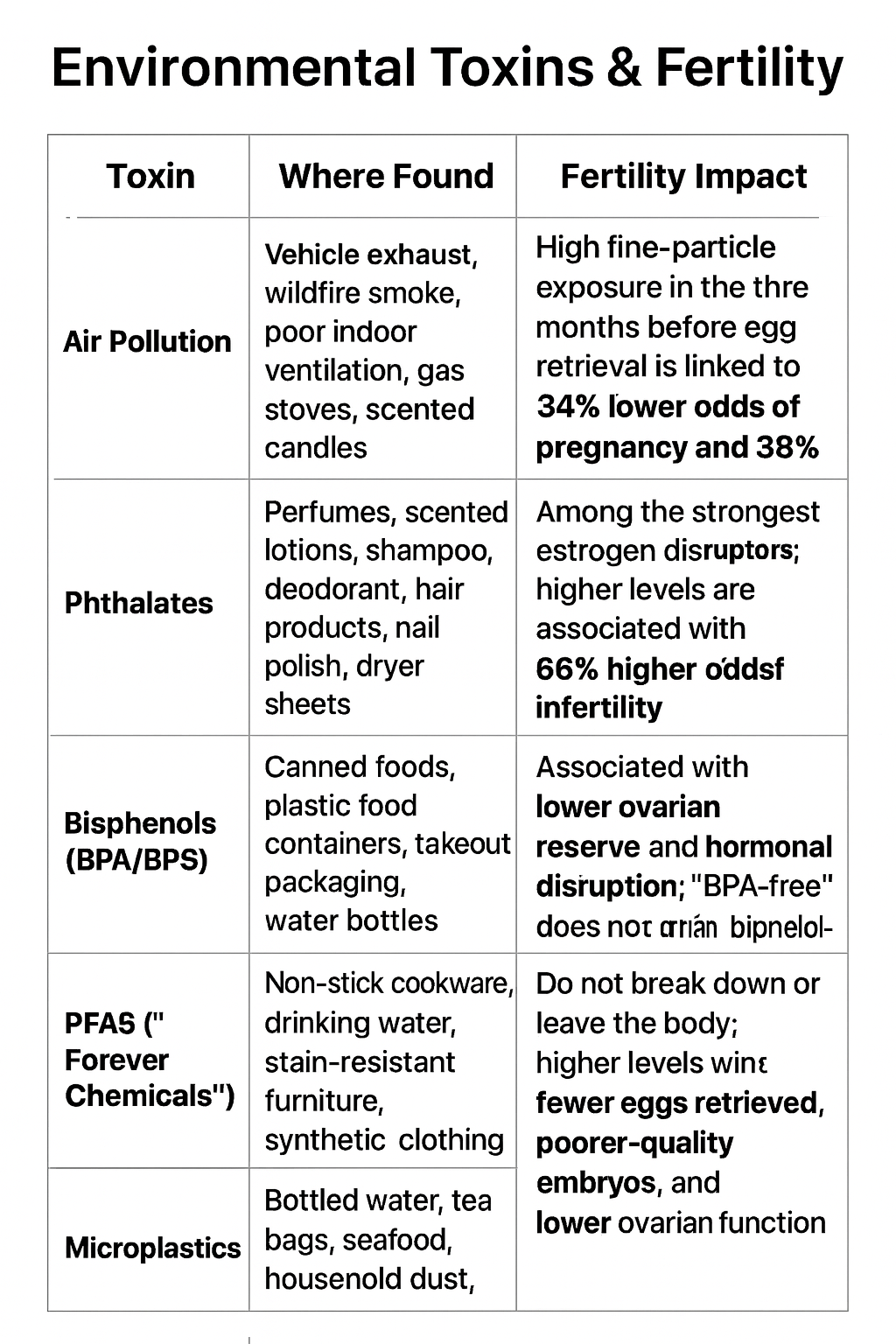
𝗘𝗻𝘃𝗶𝗿𝗼𝗻𝗺𝗲𝗻𝘁𝗮𝗹 𝘁𝗼𝘅𝗶𝗻𝘀 𝗮𝗿𝗲 𝗲𝘃𝗲𝗿𝘆𝘄𝗵𝗲𝗿𝗲, 𝗮𝗻𝗱 𝘁𝗵𝗲𝘆’𝗿𝗲 𝗾𝘂𝗶𝗲𝘁𝗹𝘆 𝗶𝗺𝗽𝗮𝗰𝘁𝗶𝗻𝗴 𝗼𝘂𝗿 𝗳𝗲𝗿𝘁𝗶𝗹𝗶𝘁𝘆.
The biggest offenders:
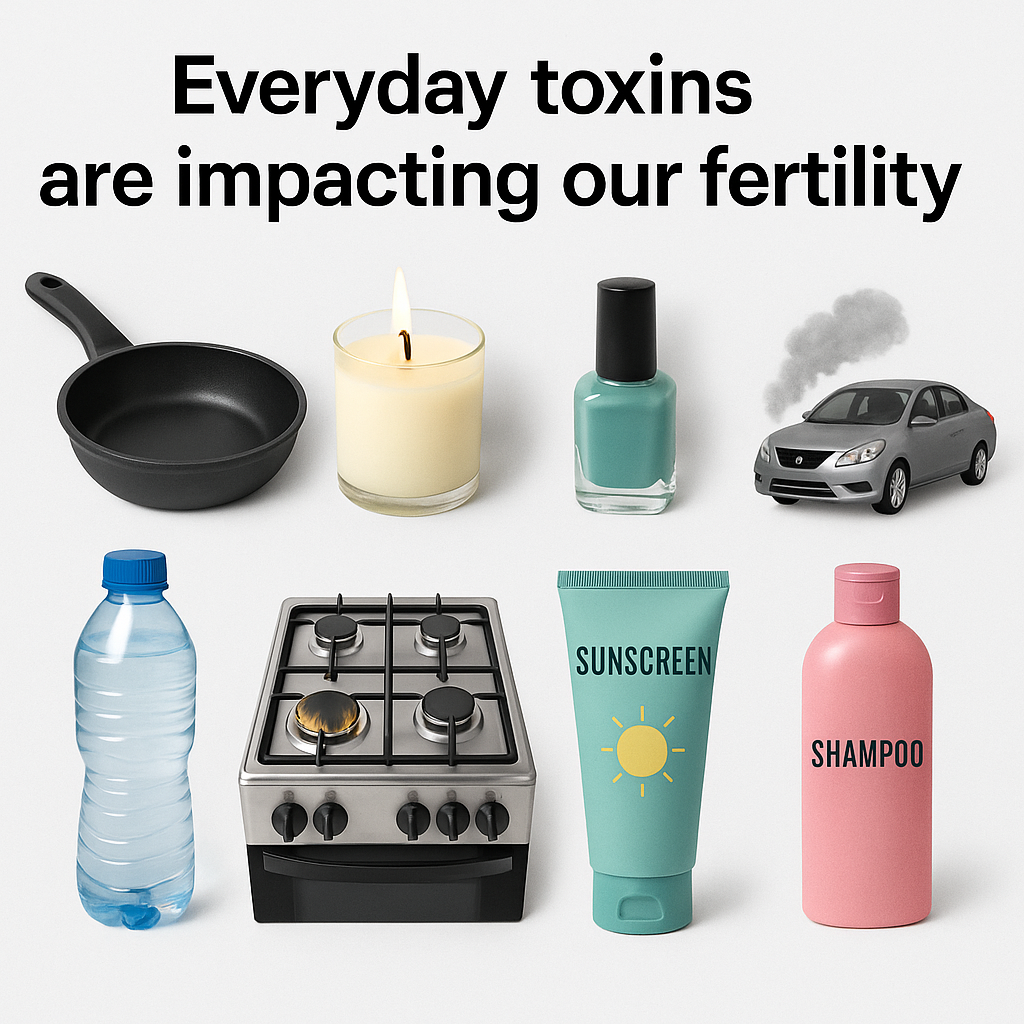
🤮. Air pollution: it's not just about vehicle exhaust; it’s about our gas stoves and even scented candles.
🤮 Phthalates: prevalent in personal care products like scented lotions, shampoo, deodorant, hair products, and especially perfumes.
🤮 Bisphenols (BPA / BPS): found in canned foods, plastic food containers, and water bottles. And “BPA-free” does not mean bisphenol-free!
🤮 PFAS (“forever chemicals”): in non-stick cookware, drinking water, and synthetic clothing.
🤮 Microplastics: microscopic plastic particles that seep into our food and bodies from bottled water, tea bags, seafood, household dust, cosmetics, and skincare products.
In that moment, I felt as betrayed as I did sitting in the fertility doctor’s office when I realized I had been naïve about my reproductive timeline.
Are we really surrounded by products that may be quietly undermining women’s ability to have children?
Unfortunately, yes.
I quickly became overwhelmed. It’s impossible to eliminate all of these risks.
Then, I realized we can’t eliminate all exposure, but we can reduce chronic, daily exposure by making intentional choices.
Here are a few practical steps to take:
• Drink filtered water; avoid bottled
• Remove synthetic fragrance (choose fragrance-free, not “unscented”)
• Stop heating food in plastic
• Improve indoor air quality; consider HEPA filters
• Avoid cosmetics with polyethylene, acrylates, and “long-wear” claims
• Use old-school cookware: stainless, cast iron, ceramic
• Choose fresh or frozen foods
• Favor cotton, wool, and linen
I found a couple helpful tools out there that rate the toxicity levels of products:
👉 Think Dirty — quick ingredient flagging
👉 EWG Skin Deep — a larger database that rates product risk on a scale from 1-10 (aim for scores 6 or lower).
Thank you, Dr. Fox, for giving me a wake-up call about this critical issue.
Remember…knowledge is power.
This isn’t about perfection.
It’s about making intentional choices to protect our health and our fertility.
Quick question: am I the only one who didn’t realize the magnitude of this problem?
