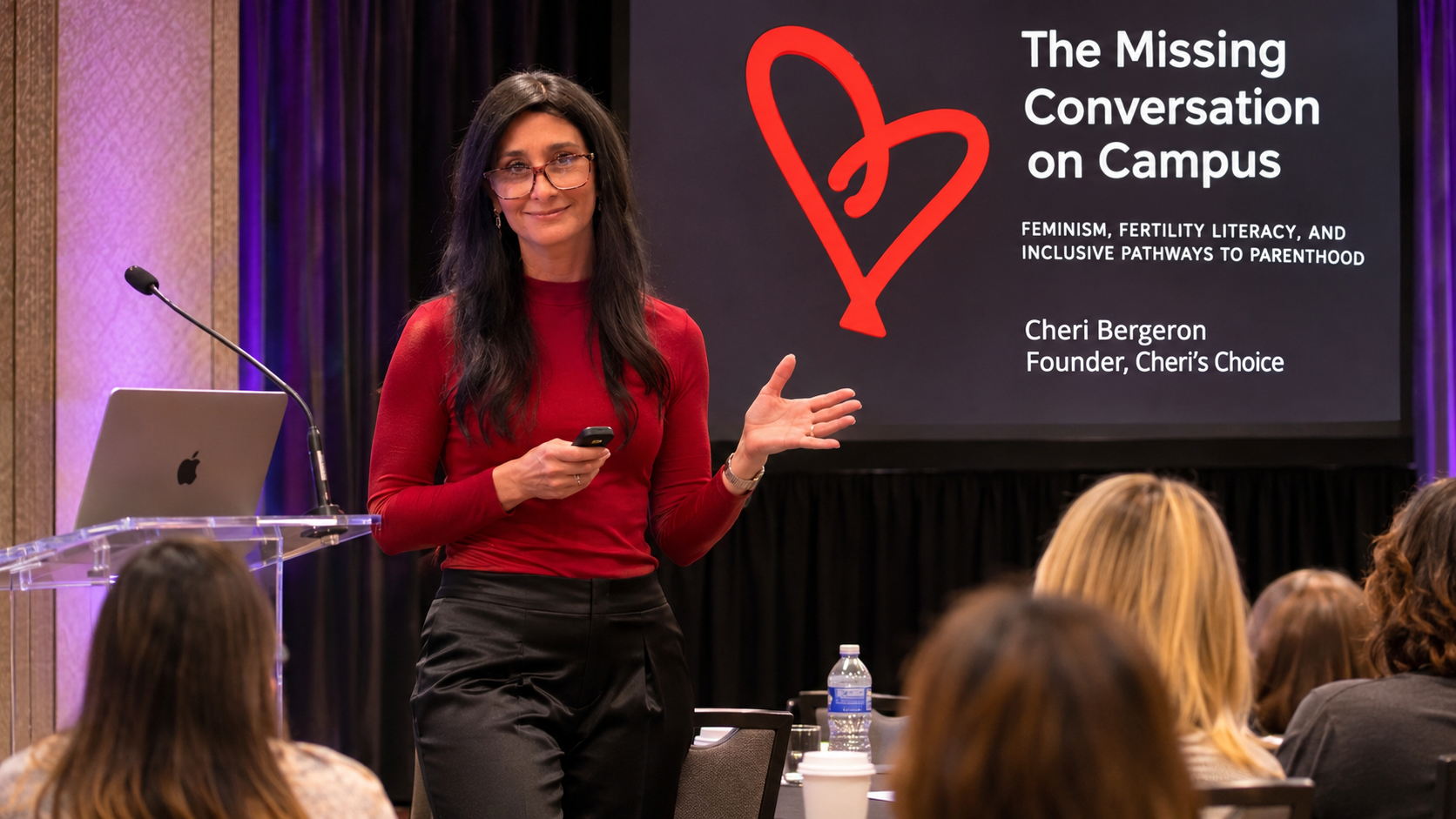
A question someone posed during my recent speaking engagement has stayed with me.
I was sharing my infertility story and the importance of fertility education on college campuses when a female sociologist voiced a concern I hadn’t expected.
Is teaching young people about age-related fertility decline a form of fearmongering? Should we really be introducing these concerns to college students when they’re focused on their education and future careers?
I appreciated the bold question, and I understand, in part, where it’s coming from.
For generations, women have faced enormous pressure about when—and if—they should become mothers. They don't need another voice saying the biological clock should dictate their lives.
But I fundamentally disagree with the idea that educating young adults about their reproductive timeline is something we should avoid because the information might frighten them.
Since when did providing accurate information about our bodies become fearmongering???
We teach young children kitchen safety around stoves and sharp objects because we know the consequences of getting cut or burned.
We educate teenagers about the dangers of vaping, drinking, and speeding—not because we want them to live in fear, but because we want them to understand the potential consequences of their actions.
We encourage young adults to start saving for retirement decades in advance because we know time matters, and building a nest egg can become harder as years pass.
We don’t call any of that fearmongering.
We call it education.
And we trust that, armed with important knowledge, young people are better equipped to make sound decisions about their lives and their futures.
Why should fertility be any different?
Consider our approach to sex education. For decades, we’ve taught middle- and high-school children how to avoid unintended pregnancies. Since 1991, the U.S. teen birth rate has declined by more than 80%, in part due to this education.
We've spent generations teaching young people how not to get pregnant.
Isn't it time we also taught them what they need to know if they someday want to become parents?
I took my fertility for granted and believed a bunch of myths about my reproductive timeline. Learning the hard truth at 40 felt like a sucker punch to my gut. I felt stupid and blamed myself. It took tens of thousands of dollars and a decade of heartache and loss to create my family.
That’s why this education matters.
Not to dictate when young people should have children or to suggest that parenthood should take precedence over education, career, or personal ambitions.
And certainly not to imply that everyone should choose parenthood.
But to give them something I didn’t get: knowledge to make informed choices about their futures.
Fearmongering uses fear to influence decisions. Education provides facts to empower decisions.
And if I can prevent just one person from going through the pain that I did, it will all be worth it.
The bold question that got me thinking

Next
Next