I wasn’t called to motherhood growing up
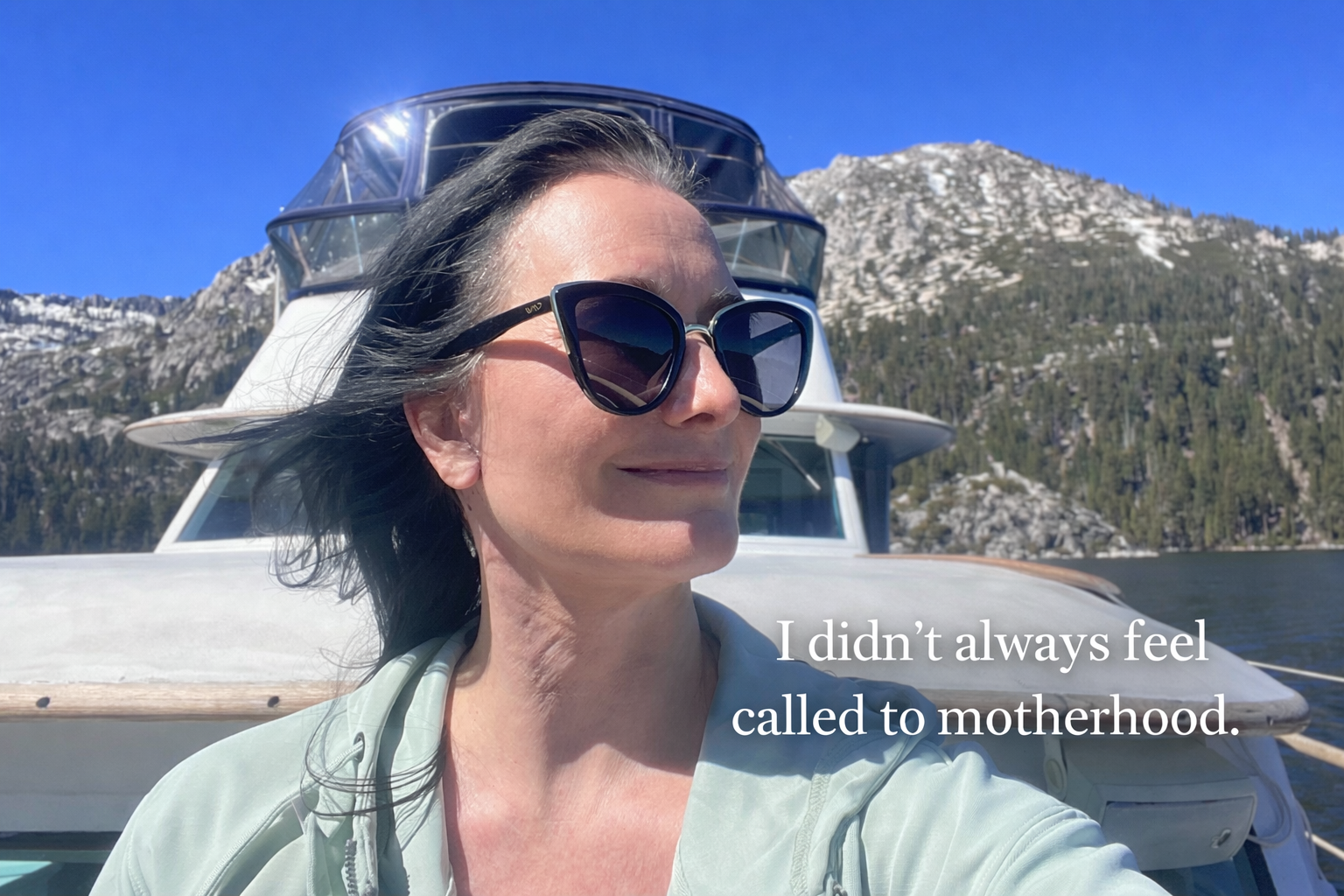
I wasn't called to motherhood growing up.
While other girls were playing Barbies, I was playing Banker.
I was driven by achievement. Independence. Financial security.
Looking back, I understand why.
My father was the provider for our family. A big, intimidating presence in our home. He earned the money…and held the power.
My mother was loving, nurturing, and devoted to raising my brother and me.
But I didn’t see her being valued.
And as a child, I drew a simple conclusion:
Money brings power and respect.
Nurturing does not.
That belief shaped me more than I realized.
At a young age, I had already internalized something many women experience but rarely articulate:
Motherhood—especially stay-at-home motherhood—is not truly valued in our society.
Part of that came from a broken family dynamic.
My mother deserved respect from my father and didn’t get it. She was doing the essential and irreplaceable work of raising two children, and yet she had less power in the relationship.
These childhood images stick with us.
Research shows that women who experience emotional wounds with their parents in childhood are more likely to have complicated or delayed relationships with motherhood.
For some, it shows up as avoidance.
For others, fear.
For many, simply…absence of desire.
But part of it was bigger than my family.
Because the world reinforces that message in subtle and not-so-subtle ways.
Unpaid caregiving (including stay-at-home parenting) is not counted in GDP. If compensated, that 60+ hours-per-week job would be worth $150,000-$180,000+ per year. Our economy literally doesn’t recognize the value of raising children.
It’s not a lack of instinct.
It’s a reflection of what we learned.
It often takes time—maturity, healing, and self-awareness—to unpack and reframe those early beliefs.
For me, that shift didn’t happen until my mid-30s.
It wasn’t just my biological clock.
It was life experience.
Dating two men with children changed something in me. For the first time, I could see motherhood not as a distraction or loss of power, but as something fulfilling, life-affirming, and legacy-building.
That’s when the desire emerged.
It was always beneath the surface.
Waiting for when I was ready to see things differently.
The truth is, there is no universal timeline for motherhood.
Some women know early.
Some discover it later.
Some never feel called at all.
And all those paths deserve respect.
For women who carry childhood wounds, the timeline may be longer.
And that’s not a failure.
It’s wisdom.
When did you realize you wanted to become a parent?
#thetimeformotherhood
#missionmotherhood
